Tuesday, November 20, 2012

Brave New Worlds or the Same Old Ones?


by Brian Martin

Star Wars.  Just the mention of it sends a warm, nostalgic swell through my body.  It was a series that not only looked and sounded great, but made a young kid feel like anything was possible.  I, like so many of us, spent my youth playing with Kenner’s boundless line of action figures, dreaming up the further adventures of Luke Skywalker, Bib Fortuna, and Snaggletooth in that galaxy far, far away.  Hell, in middle school I even attempted to make a stop-motion sequel to Return of the Jedi, in which a newly christened Emperor Yoda was assassinated and J.J. from Good Times had to discover who was behind the plot.

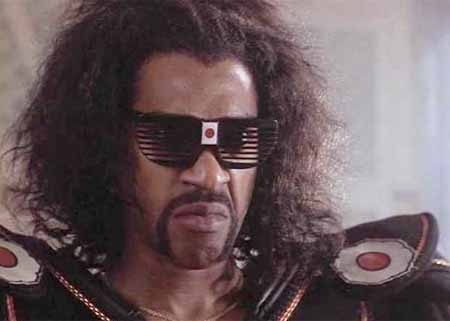
They really did make an action figure out of everyone
Full disclosure: I do not hate the prequel trilogy.  I don’t believe that George Lucas “raped my childhood” with the prequels.  I think Lucas made three flawed movies that don’t measure up to the impossibly high standard I’ve held the original trilogy to for my entire life, but I would never even consider mentioning The Phantom Menace in the same breath as Battlefield Earth or Transformers: Revenge of the Fallen.  It’s just not that bad.

The Star Wars prequels were always going to be problematic, because they had to end up in a specified place.  This is the reason that Revenge of the Sith turns into a checklist of events that have to transpire before Episode IV can start.  Anakin becomes Darth Vader?  Check.  Obi-Wan takes Anakin’s lightsaber?  Check.  Twins born?  Check.  C-3PO and R2-D2 are aboard the Tantive IV?  Well, it’s a little early, but check.  Yoda says his teary farewell to Chewbacca?  Uh…check?  All the pieces had to be put in a preconceived and widely understood place, completely eliminating the potential for suspense and surprise.  But now, with Episode VII, we’ll finally get a new Star Wars film that isn’t beholden to anything, one that can literally take us anywhere.  Why, then, are fans so opposed to that idea?  Not the idea of a new Star Wars film, mind you, but the idea that it should be, you know, new.

She kept that thing?  I did NOT see that coming!
We’ve been hearing it since 1991, really.  Ever since the release of Timothy Zahn’s Heir to the Empire, fans have been exploring what came to be known as the Expanded Universe, a series of ongoing tales set outside the events of the (then only) three films.  Zahn went on to pen two more novels to complete his trilogy, and fans almost immediately started saying the same thing: “They should just turn these into the next Star Wars movies.”  Sure, it might’ve been fun to imagine back then, when the prospect of any new Star Wars films seemed like a pipe dream.

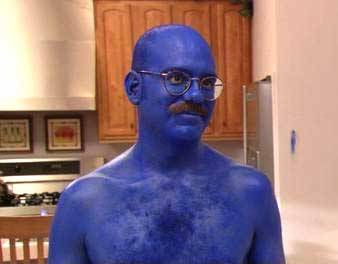
Now, here we are two decades later and, due to circumstances my brain is still struggling to understand, a new Star Wars movie is getting made.  I had accepted the fact that the Lars family, looking out over the Tatooine sunset, was going to be the final cinematic image Star Wars ever gave us, but the world has changed.  As soon as the news sunk in, my brain started swimming in the possibilities of further stories, which is why I was so surprised when a large portion of the fan base simply went back to their 20-year-old default idea: “They should just make the new movies the Thrawn Trilogy.”  (Admiral Thrawn was the blue-skinned antagonist of the Zahn novels).

The fact that these folks typically use the word “just” in that sentence is a testament to the sheer laziness of the idea.  Really?  The first completely fresh Star Wars movie project in three decades and the best you can do is an adaptation of a novel that you read 15 years ago?  Granted, those books are pretty good.  My own exposure to the Expanded Universe doesn’t stretch far beyond Zahn’s novels, though.  I read the Dark Empire comics.  I played a few video games.  That’s about it.  But if there is one unifying thought I had while engaging with all of them, it was that I did not, under any circumstances, care to see them adapted for the screen.  I had already enjoyed them in their respective mediums.

This phenomenon isn’t even unique to Star Wars.  For years, people clamored for a fourth Indiana Jones movie, and a lot of them said the same thing: “They should make it an adaptation of Indiana Jones and the Fate of Atlantis,” which was a goddamn computer game!  This line of thought persisted throughout early development of Kingdom of the Crystal Skull and, in the disappointment that followed the release of that movie, has morphed to become, “They SHOULD HAVE just made it Fate of Atlantis.”  Uh, no, they STILL shouldn’t have.  Kingdom of the Crystal Skull may have had its monkey-swingin', fridge-nukin', Shia-LaBeoufin' problems, but making it a video game adaptation was NOT the solution.  Even though filmmakers might not always know what’s best for a franchise, they can sure do a hell of a lot better than unimaginative members of the fan base.


For the life of me, I cannot understand the persistence of this line of thought.  You want the next movie in a franchise so near and dear to your heart to be one that you already know the entire story to?  No surprises?  No discovery?  Do you even remember WHY you fell in love with these movies to begin with?

Thankfully, Disney was quick to kill the very thought that a new film would be based on anything from the Expanded Universe and it would instead be an original story because they understand that that’s the only way to make the movie.  For every hardcore Star Wars fan out there who’s read every adventure of Mara Jade, there are about a million casual fans who have, I dunno, ONLY SEEN THE MOVIES.  Do a Wikipedia search for Star Wars novels.  Even the staunchest of fans might take a look at that list and burf a little in their mouth.  The last thing any studio or filmmaker with half a brain cell would do is make Star Wars Episode VII, the latest entry in a film series that doesn’t exactly pride itself on being impenetrably complex, IMPENETRABLY COMPLEX.  So brace yourselves, fans of Kevin Anderson’s Jedi Academy series—your holy text is about to get blown to hell.

This, of course, doesn’t mean that elements from those stories won’t be incorporated into the new films.  This has actually already happened once, with the inclusion of Coruscant (a planet established in Zahn’s trilogy) in the prequels.  That Leia and Han have twins seems like a no-brainer, and any movie that DIDN’T include a new member of the Skywalker bloodline certainly wouldn’t mesh well with what’s come before.  Luke will obviously have continued efforts to rebuild the Jedi order in the wake of Episode VI, and ignoring this in any future installments would, again, seem odd.  However, I have serious doubts that the filmmakers are going to be sitting down with detailed synopses of every EU story and saying, “Ok, how do we make our movie fit in here perfectly?”

Everyone is nervous about Star Wars VII for completely different reasons.  Some are afraid it will contradict the 900 novels, comics, and fever dreams that came before it.  Some are afraid it will include the original actors.  Some are afraid it won’t include the original actors.  Some directors are scared to get near the thing for fear of insurmountable expectations.  And I can’t be the only one who’s thought of the obvious: that this will be the first Star Wars film to open WITHOUT the 20th Century Fox Fanfare?

Why is NO ONE talking about this?!  Sacrilege!!!
Whatever our fears, and whatever our expectations, two things are certain.  We will ALL be there.  And, once again, anything is possible.

NEXT: Mel will, seriously, talk to you about longevity.

Sunday, November 18, 2012

I’ll have what she’s having…. And she’s having and she’s having…..


by Nate Bowden 
@ActionNate

Ah, the cliché. Is there a more potent obstacle for the screenwriter, the novelist, the ranter? It takes so many forms: cliché dialogue, cliché characters, cliché imagery, and just plain cliché storylines. Fuck if there isn’t another nerd out there right now planning a rant on how cliché my opening is.

We’re all writers here, we’ve all heard that there are only 7 stories and nothing’s original anymore, I buy into that. So now I’m gonna use a smart person word fer cliché… archetype.

A cliché is almost subjective. A matter of overuse or misuse of any given archetype but these are the tools we use as writers to craft our stories. When the pieces of the puzzle come together it’s called “a beautiful presentation of the hero’s classic journey," and when it doesn’t it’s called Van Helsing.
"What? Y- you didn't like it?"

Luke Skywalker is Clark Kent without the secret identity, and Comdr. Data is just Pinocchio. James Bond gets to create all his own clichés and act them out repeatedly. And Peter Parker’s just an everyman. Seriously, “everyman?” An archetype so cliché literally every man can fill it.

Our Herculean task then is to disguise these clichés with a great story, sure, but how about some fancy scenery? Scoring the big touchdown in the closing seconds against insurmountable odds (or coming up short if your story’s a coming-of-age piece), totally cliché. But what if the game is played in the air… and we call the football a bludger and everyone rides broomsticks? Bam! Hidden cliché, right? Well sure, but camouflage is tricky because blue furry people in space couldn’t distract me from the fact that Kevin Costner danced with wolves before Sam Worthington plugged his ponytail into a dinosaur.


"Fuck you! We did this shit in space!"      "Wait, what is that over there? Oh, sorry, it's just my seven Academy Awards."


Clichéd scenarios are largely built around where they occur. Two men, spies even, nonchalantly exchanging identical bags at the train station? Stop me if you’ve heard this one… but nonchalantly exchanging identical bags in the oval office? Sweet holy fuck, what is in that briefcase?

“Yeah _____ was great, but I liked it better when it was called ______.” Well, smart-ass, clichés have to work in order to become clichés in the first place. That’s true with character and dialogue.

How many times has Schwarzenegger played  John Matrix (Commando), and how many Die Hard movies have there really been? Rocky is just John Rambo in boxing gloves, but Balboa is compelling because Rocky is inspirational, while Rocky 4 is cliché, and then by Rocky 6…. inspirational again. Huh, how do you like that?

I’m sure the first guy to scream “NOOOOOOOOOO!!!!!” at the death of a loved one was breakin’ some new ground, but really? Even Darth Vader now? That straight badass doesn’t scream about anything. Fuck prequels.

Rob Reiner’s mother stole an entire movie with “I’ll have what she’s having…” The joke’s cliché now, but it wasn’t When Harry Met Sally.

So you know when something is really good because it becomes a cliché. Col. Nathan R. Jessup screamed “You can’t handle the truth!” and brought life to the climax of my favorite movie. And the fact that you’ve heard it elsewhere since then, in regular conversation no less, proves Sorkin got something right. Great things make it into vernacular and then get spit back out as clichés.


“I’m getting too old for this shit…” NO! Fuck you! Only Danny Glover is too old for shit! Damn it!


Now M. Glenn Gore on “longevity.” What makes that show we watched as kids a steaming dung pile now? … unless it isn’t!


Saturday, November 17, 2012

Lost In Translation

By Nicole Angeleen  www.nicoleangeleen.com

Next summer, the world will be given another cinematic adaptation of F. Scott Fitzgerald’s most famous novel, “The Great Gatsby.” It is brought to us by Baz Luhrmann, who should be perfectly suited for a story that features a nonstop parade of opulent parties during the age of prohibition, excess, and the disintegration of the American dream. Adding to my hope that this will be a good movie is Leonardo DiCaprio in the titular role, and God knows red-blooded American women love Leo.

Despite all that in favor of this being an enjoyable, successful version of “The Great Gatsby,” I can’t make myself believe that this is actually going to be a good movie. Like most of Fitzgerald’s work (I’m lookin’ at you, “The Curious Case of Benjamin Button”), Gatsby is less of a story than it is an extended metaphor. Given the current tone of society, I don’t see how this can play as anything but a heavy-handed commentary about our own lopsided values.

Can't you fools see how your short-sighed obsession with wealth and shallow relationships will ultimately lead to your ruin? Also, look how handsome I am, just like decorative veneer of my pageless books.

Great “classic” books are packed with symbolism and barely concealed meanings (if you’re not much of a reader, just imagine it’s like if Adele wrote novels), and they simply don’t translate well to the silver screen. Who wants to sit through two hours of an expansive allegory? Aside from Terrence Malick fans, no one.

It's all so profoundly meaningful.  You just don't get it.

So why are legitimately good novels so often made into undeniably shitty movies? Let’s be clear. Good novels and popular novels can be two different things. Sometimes movies based on novels are terrible because the source material is utter drivel masquerading as legitimate fiction. Think Nicholas Sparks or the overwhelming mediocrity that is a John Grisham novel. Also, I’m not talking about movies that people think are bad because they wander too far from the original story. To me, that doesn’t make a movie bad. Prime example, other than the basic (flawless) premise of dinosaurs created from fossilized mosquitoes, the movie version of “Jurassic Park” strays considerably from the novel, but I love them both. No, here we’re talking about awesome books turned into steaming crap piles by the movie industry.

Pictured: Not in the book.

Bram Stoker’s revolutionary diarist format and slow building of a monster is obliterated by an overblown effort from Francis Ford Coppola. “The Scarlet Letter” as a movie rife with sex and temptation is insulting to Puritans, women, and Nathaniel Hawthornes everywhere. I still fail to see how “Timeline” and “Congo,” movies based on terrific novels by the incomparable Michael Crichton, managed to be such emotionless jumbles. Just this year, the most popular female fictional character of the first decade of the twenty-first century, Stephanie Plum, was ruined by an utter lack of humanity and imagination in the absurdly watered down “One for the Money.”

Then there are the worst offenders, the movies that raped my childhood. Like many of you, Dr. Seuss taught me how to read. “How the Grinch Stole Christmas” is not only a great book, it already had a lovely movie adaptation in its natural cartoon format. The Grinch is an unmitigated douchebag who has a heart two sizes too small and wants everyone to be as miserable as him. The perfect villain. That the 2000 live action version turns The Grinch into a victim of bullying is only one of the many reasons why this movie is just the worst. Add the weird sexuality, the disgusting gags, and you get a movie with a heart even tinier than the Grinch’s. Why? Why Ron Howard? I hold this movie personally responsible for what happened to Taylor Momsen.

There's nothing about this image that doesn't make me want to scream.

And the live action version of “The Cat in the Hat?” That sociopathic, creepy sonofabitch still haunts my nightmares. Seuss’s Cat is a whimsical, mischievous, fun-loving rascal rife with exuberance and well-meaning hijinks. Michael Myers’ Cat is hell-bent on destroying the lives of Sally and Sally’s brother (who the hell is Conrad, amiright?) and is overtly gross and malicious. It is an uncomfortable perversion of a series of books primarily designed to keep the attention of children while they learn the basic building blocks of reading. "It’s time to have fun, but you have to know how." If only the assholes who decided to create this monstrosity had actually read the book.

Hollywood loves doing this. They love turning groundbreaking original work like “Angels & Demons” into frenzied, disjointed nonsense. They love trying to film Toni Morrison novels (can't be done) or reinterpreting William Faulker (nearly uninterpretable in its original format). They think because the source material is “meaningful,” depth will automatically translate into their movie. But it doesn’t. Ever. Never ever. It’s hard to stress that enough.  Frankly, the opposite usually happens.  Words on a page and action on screen are different. For instance, the first-person, split narrative structure of “The Help” is lost in a movie version that is whitewashed and condensed to be made palatable to the masses, and “The Help” was a decent movie.

"Let's not confuse the audience by indicating in any way that working for these insufferable racists isn't our biggest aspiration in life.  Agreed?"

To me, the best movies based on novels are the ones that don’t try so damn hard to be fraught with significance and subliminal commentary or “revolutionize” what worked for a novel in the first place. Like any movie, just tell the story. If it’s based on a great book, that really ought to be enough. If it’s based on a crappy book, don’t expect a great movie (Twilight).

It’s not like it can’t be done. As always, I recommend reading the book first, but check out “Winter’s Bone” by Daniel Woodrell and/or “Gone Baby Gone” and “Shutter Island” from Dennis Lehane (who if you’re not reading, start now), then watch the adaptations; read “In Cold Blood” and then watch “Capote”; “The Green Mile” and “The Shawshank Redemption” were both based on Stephen King novellas; even some children’s stories are getting it right, just look at the books and movies for “Matilda” and “The Chronicles of Narnia: The Lion, the Witch, and the Wardrobe.”

Despite those hopeful examples, I’m still worried about “The Great Gatsby.” Fitzgerald was miserable in the final years of his life because financial ruin forced him to work in Hollywood, which he considered vapid and meaningless, and not much has changed. I have to think he would be scratching his head as to why they keep trying to adapt his least filmable novel.

And you know a film version of “Fifty Shades of Grey,” can’t be too far away. Ugh. I take it all back. Screw you, Hollywood.

Tune in next time when Nate Bowden beats a dead horse and really screws the pooch talking about cliches.

Thursday, November 15, 2012

Nobody Eats Ketchup ALL the Time!

by Wayne Spencer

Sequels, man. Is there anything else, at once, so disgusting and appealing as the idea of a movie sequel? Don't answer that. I'm sure that there is.

The answer I was looking for is "No, friend. No, there is not."

What is a sequel anyway, but a little bit more of something you already like? Think about it like this: You just had a pretty sweet adventure with an unlikely kung-fu master, who has to figure out the secret of true power, face the hideous, seething legions of an evil arcade owner, rescue the people he loves and stand fast in the face of the unstoppable and charismatic shogun from Harlem. A shogun who only wants to dismantle him FOR NO GOOD REASON.

No good reason at all!
 Also imagine that after all of that harrow, you and the good-guys all make it out in one piece, by the skin of your proverbial teethses. Once you catch your breath and make sure that everyone in your party remains unharmed, your first couple of thoughts are probably going to be something like "Man, I hope they make another one of those." You get excited and optimistic when you hear that 'they' in fact will produce a second film in the series. Why, you might even blurgle a little. Indeed, you love this film.
This, friend,  is when it happens. Now is when the thing happens, and this is the thing: Upon further reflection, you feel a little downer in the city hall of your heart and you sigh your only hope. A hope which is "... they don't screw it up."
They never made that sequel, by the way.
So, sequels go wrong sometimes, is what I'm getting at. In the age of franchises, the road is littered with the corpses of those that went a little too big, got a little too cocky, dug a little too deep... and set something terrible loose.
Of course, there are good sequels, too. Among them are juggernaut-epics like the Harry Potters or Lord of the Rings-es, stalwart follow-ups that were solid and cool, like Back to the Future 2, or even House 2 and sequels that, while they didn't add a whole lot to the cosmology of the franchise, were serviceable and still enjoyable in their own way. Of this number, I would name Ninja Turtles 2: Secret of the Ooze and its clumsy older brother, Ghostbusters 2.
"Come on, guys. It wasn't THAT bad!"
That's not what we're here to talk about though, is it? You came here for blood. You came here for blood, and I'm going to give it to you.
So where do sequels go wrong? Well in lots of places, but in the interest of time, we're going to focus on one key area. Do you remember the movie about the guy that found out that his boring, meaningless, workaday life was just a lie? It was just a lie and, indeed, he was actually the totally radical chosen one that everybody and their grandmas needed to save them from boring, everyday lives!
Also, trenchcoats. To be fair, that's a lot of movies, but I am specifically referring to the Keanu Reeves x Wachowski kung-fu/helicopter movie: The Matrix.
Now if only stopping The Matrix: Reloaded had been this easy.
 And what is this series' crime, you might ask? Well, there are a few, but the most egregious:
Forgetting what made the original great.
The Matrix is a fine film and a film that, in my estimation, has aged pretty well. It's about a regular guy falling into a situation that is nearly beyond his comprehension and finding out that he's not so normal after all. It's about questioning the status quo and figuring out what the universe is to you, you know, like personally. It's also about how accepting responsibility can be good for the people around you. There's also a love story in there somewhere, I guess.
The next two movies are about... hmm. They're about... well there's a lot of kung-fu fighting. Um, a guy jumps on a car like REALLY hard. Oh yeah, there are lots of Gundams shooting jelly fish.
"Never bring a mech to a spaghetti fight!"
I exaggerate, sure, but it's true that the cool action set pieces in the first movie were like a spice, or a condiment. They were an added bonus to already engaging things that were going on. The understated nature of the rest of the movie is a tremendous contrast to those moments, so when a crazy kung-fu fight breaks out and we just spent the last 15 minutes eating gruel and speaking softly, it's like "Whoa."
My point is, NOBODY EATS KETCHUP ALL THE TIME! But the over-the-top action, the cyber-mystic mumbo jumbo, those things became a main focus of the latter two films.
They are ketchup all the time, and they are ketchup to their detriment.
Look, there are good sequels and bad sequels and I'm not really sure if either one outweighs the other. But for the most part, ones that don't live up to whatever it is they are trying to recapture seem to have missed the point, or else-wise forgotten the point of why they were even bothering in the first place.
Sequels, man. 
NEXT: Nicole Angeleen tells us why many good books seem determined to become bad movies.

Monday, November 12, 2012

Leave it to Chance... or Laziness

by M. Glenn Gore

Remember the scene from Indiana Jones and the Temple of Doom where Indy and that kid from The Goonies were trapped in an underground vault while a heavily-bespiked ceiling crept closer with every nail-biting second? Oh, I know how you do. It was tense, gripping cinema played with reckless, edge-of-your-seat abandon.

But what if, at that final, pulse-pounding moment when death was assured, the trap just up and broke? Or a janitor happened along and opened the door to let them out? Luckily, that didn't happen, but if it had, the nauseating disappointment you experienced would have been palpable. That phenomenon, friends, has a name. The damned call it deus ex machina.

Deus ex machina is Latin for "You're a hack who couldn't write your way out of a wet paper bag", and it is the Irritable Bowel Syndrome of storytelling illnesses. The literal translation is "God from the machine." That's because the concept was popular among Greek playwrights, particularly Euripides, who was adamantly opposed to letting his audiences leave in a better mood than when they entered. In the play Medea, Tyler Perry poisons, like, half a dozen people or something, and just when her husband goes to smack her jilted ass, the God of the Sun literally swoops down and rescues her. I think. It's been a while since I read it.

"Of all things upon earth that bleed and grow, a herb most bruised is woman."
This mind-numbingly lazy device occurs whenever the protagonist finds him/herself in a situation that spells certain doom and they are inexplicably saved by a character, object, or previously unmentioned ability. This is also known as what poor authors do when they've written themselves into a corner, and you would not believe how often it happens!

I am an enormous fan of Avatar: The Last Airbender, and it is easily one of the greatest American cartoons ever made. It focuses on a world where many people can control the elements. This skill is known as Bending. The titular character spends three seasons mastering the four elements so he can do battle with Mark Hamill, the series' resident Big Bad. He's a merciless, fire-wielding dick whose designs for world domination must be halted, so it is of the utmost importance that he "get got." However, as the Avatar is a gentle soul, this is simply not a viable solution. Nor is what follows. SPOILER ALERT!

On his way to the final battle, a gigantic, talking turtle gives the Avatar the power to take away another person's Bending, making it the fourth most awesome talking turtle in history, right behind Bowser, Raphael, and that pants-pissingly scary thing from The Neverending Story. The technique is dubbed Soulbending, and it's a deus ex machina because it saves the day at the exact moment we most need it to, despite having never been mentioned before by anybody in the show's 61 episodes!

"Soulbending, my ass! Tell me how to get to the Southern Oracle!"
Jurassic Park is another offender. Not the exceptional novel by the late-Michael Crichton, mind you, but the commercially successful but heinous-sequel-spawning 1993 film. In this light-hearted, fine-for-all-ages tale of desperate, greed-addled men blindly hurdling the fence into God's playground as they go on an abominable foray of amoral genetic exploration, we are introduced to the Velicoraptor, a dinosaur so monumentally badass we never once studied it in school! The movie devotes two of its first three scenes to showing us in graphic detail just how vicious and calculating these creatures are. They're fast as cheetahs, they set traps, they have sickles for feet, and they hate children. They even went so far as to stage the assassination of the film's designated "Raptor Expert" just to prove they could! Why Skynet didn't just send one of these things after Sarah Connor we'll never know! 

"We need your clothes, your boots, and your motorcycle."
Now, lethal as these dudes are, they're no match for the Tyrannosaurus Rex, which, for reasons passing understanding, comes to everyone's rescue at the movie's climax by somehow navigating its way across an entire island and squeezing through a people-sized door without a single person noticing. How does something the size of a Ferris wheel doing a vocal impression of a derailing Amtrak sneak up on you?! We spent - I shit you not - three scenes illustrating the fact that you can hear it coming from miles away and that it couldn't be quiet if it were swaddled in Temper-Pedic mattresses! That ending is so balls-almighty stupid that it threatens to eject you from the movie like a SPECTRE agent from an Aston Martin!

Despite this, the greatest modern addict of the dreaded deus ex has got to be J.K. Rowling! Don't get me wrong; I'm a great fan of the 1st, 3rd, 4th, and 5th Harry Potter novels and an even greater fan of the 1st and 3rd films, but the woman works in convenience the way other artists work in clay. Consider the conflict at the end of her sophomore effort, Harry Potter and the Chamber of Secrets. Harry has gone down into Hogwarts' innards to rescue Ginny Weasley from a snake so enormous Evel Knievel couldn't jump over it. At this point in the story, Ron has been foiled by rocks, and Hermione has turned herself into a cat, so Harry has to go it alone.

But don't worry. He's got this. Why does he got this, you ask? Because in the middle of the fight against this ancient and indomitable force he stands no chance whatsoever of overcoming, a phoenix appears (unexpectedly), locating Harry in enough time (implausibly) to deliver unto him the Sorting Cap (okay?), from which Harry draws the fabled sword of Gryffindor (do what, now?), and slays the leviathan.

Pictured above: Bullshit!
I have to give Rowling credit, though. A deus ex machina triple play is a hat trick few writers have been brazen enough to attempt and with good reason. This nonsensical confluence of events comes so fast and from so far out of left field you'd have sworn Barry Bonds threw it!

How there isn't just some written rule about the use of deus ex machina is beyond me. This is a serious problem, and it needs to be snuffed out. It should be treated like plagiarism. If you're guilty of it, you should have to wear a big scarlet "D" on your chest for the rest of your life. It should come with a hundred hours of community service, a public apology, and an online database of registered offenders so you know when one of them moves in next-door to you. After all, it's important we keep our children safe.

Now that I've got that off my chest, Wayne Spencer is going to talk to you about how NOT to make a sequel. Tune in next time.

Saturday, November 10, 2012

I Choose You, Anakinchu!


by Brian Martin

For a term as suggestively singular as “Chosen One”, there sure are a lot of them.  In fact, a Wikipedia search of “Chosen One” unveils a list of landmark fictional heroes like Harry Potter, Buffy Summers, and Tim Tebow.  What do these characters all have in common?  They are ALL relatively recent additions to pop culture.  Yes, there seem to be a lot of people running around today who are preordained to overthrow something.  Hell, four years ago people were saying the same thing about the President-elect.

Literature is full of Chosen Ones.  We had, of course, The Jesus.  Surely He was a Chosen One.  There was Arthur Pendragon.  Then…um…Rodimus Prime?  Was he next?  Were there really no more Chosen Ones for 1,000 years of storytelling?  What happened?  And more importantly, why are some of them complete fops?

It’s easy to figure out why writers love prophecies surrounding chosen heroes rising to rescue people, save the world, or kill all the Jedi.  Divine right gives us instant character motivation.  Why is the hero the hero?  Well, because he’s meant to be the hero.  There!  What more do you want???

Anakin Skywalker is certainly a product of this device, although less in the eyes of viewers (who know where he’s going to end up) and more in terms of his own worldview, since the only reason he even decides he’s capable of being an insufferable Force-wielding dick by Attack of the Clones is because he’s had people telling him he’s the “Chosen One” for ten years.

"How much you wanna bet I could throw a football clear over them mountains?"
Why does Qui-Gon Jinn even bother rescuing Anakin from his impossibly nice slave resort on Tatooine, when by his own admission he “didn’t come here to free slaves”?  A prophesy.  Why does Obi-Wan train Anakin, even though he clearly hates kids?  Qui-Gon told him about the prophesy.  When it all goes to shit at the end, what does Obi-Wan shout at Anakin?  You were the Chosen One!

"Seriously, kid!  What the fuck?!"
If Anakin was the prophesied “chosen one”, then why was he so miserably BAD at filling that role?  Wasn’t his son a better chosen one than he was, a hero in the vein of Arthur, rising from obscurity to topple an oppressive regime?  And did anyone ever need to refer to Luke as a “chosen one”?  No, because he was given perfectly serviceable character motivation.  He had a reason to be doing what he was doing, unlike Anakin, who (other than the fact that he liked shiny objects) had no real reason to leave home in The Phantom Menace.

By comparison, The Matrix at least gave its chosen one a logical, perfectly relatable reason for embracing his destiny: Neo was essentially living in Office Space.  If that isn’t motivation to embrace fate when it comes calling, I don’t know what is.

"Oh, no!  I totally forgot those T.P.S. reports!  Bogus!"
Neo has obviously been waiting for this moment his whole life, since his online handle is an incredibly lazy anagram of “one”.  It’s easy to picture a young Thomas Anderson sitting around moping, listening to Rage Against the Machine, and saying, “I wish someone would tell me I’m a chosen one!”  It’s no surprise, then, that Neo fares pretty well as a chosen one.  For a while.  Then comes The Matrix Reloaded, where we discover two things about Neo: 1) he should have taken more philosophy courses in college and 2) he, like Anakin and Jesus, also has a high Midichlorian count.

How else would you explain this?
By the end of the second Matrix movie, Neo’s status as chosen one is looking a lot less “action hero” and a lot more “well-spoken scholar/diplomat”, a role that, obviously, was never going to suit Keanu Reeves very well.  And ultimately how effective is Neo at being a chosen one?  Who wins at the end of the Matrix movies?

The Matrix movies end with a stalemate that even the Architect and Oracle agree probably isn’t permanent.  All the bullet-time in the world, and Neo couldn’t even create a lasting peace?  At least Anakin eventually tossed his boss down a reactor shaft.

So what’s the deal with “Chosen Ones”?  Are they cop-outs, just to get out of building real character motivation?  I’d like to think they represent more than that, showing us that anyone is capable of achieving great things when called upon to act.  All we’ve learned from these two schmucks, though, is that where destiny goes, whining and ineptitude follow close behind.

Next: Mel gets to discuss Deus Ex Machina: Crutch of the Damned.

Monday, November 5, 2012

Set a course for the 24th century!


Time travel stories are often predicated on the notion that if you change something while in the past it can alter the future, and just ask Ashton Kutcher and his magical composition books how that can turn out… drama motherfucker.

Now I love time travel stories. They’re stories, that when done right, are the kind you can paradoxically discuss at length with your nerd brethren.
But I guess I’ll get to the crux of the problem. Once you give a hero or villain the innate ability to travel through time, there’s ultimately nothing to stop them. Look how many chances Skynet has taken to kill John Connor, two good ones, and two really bad ones. But when you fail, just go back and try again, and again and again. World domination through trial and error. That’s a whole lotta power.

My favorite example of this principle is Star Trek: First Contact. The villainous Borg, can evidently travel in time whenever they want. Well they failed to prevent humans from getting warp speed… this time. Of course there’s nothing to say they can’t try again, or already have. Nothing to keep them from traveling back to give themselves technology from the future to grow exponentially powerful. Too much power for one Queen Bee to have.

"Te- tell me how you do that time travel thing..."


Now Picard  has that power with seemingly no explanation at all. “Set a course for the 24th century…” and boom, humans can travel in time while ignoring the obvious physics that require using the gravitational pull of the sun as a slingshot. Duh.

These bozos, smart enough to create time travel, never really seem to know what to do with it. They NEVER go back far enough to vanquish their enemies or achieve their goals, like warp speed and first contact. It’s always at that  pivotal moment when the hero, or target is just on the cusp of accomplishing whatever they’re trying to prevent. You gotta fuckin’ time machine, dude, give yourself a little leeway...

Heroes aren’t too bright either. Marty goes back to 1886 to save Doc’s life (BTTF 3) and figures, “Eh, 3 days ought to do it.” Why not go back a little further? Well probably because you learned from Doc, who gave them about 15 minutes to prevent a total disaster (BTTF 2).

"Doc, I don't think that shirt's gonna be in style in two years..."

But then evidently there are some changes that should never be made. “Can’t mess with the time stream… y’know, a lot.” Unless you’re Sam Beckett and you Quantum Leap all over the place doing just that. Good for you. Throw that worrisome space/time continuum shit out the window and tell me a good story.


Who comes up with these ethics anyway? No one sent Van Damme the Timecop, to stop Ashton and his magical composition books. But hey, here’s hopin’ there’s still time.

Next Brian Martin: ”Chosen Ones: the Roast of Skywalker and Neo.”